


SPACE FRAME STRUCTURES.........FROM FUNCTION TO AESTHETIC

History
- The development of space frame technology is based on multiple independent efforts by a variety of inventors working in diverse fields. The first known attempt to construct a space frame was by Alexander Graham Bell, who applied the idea to flight engineering. Decades later, architects would create the geodesic dome, the first widespread applied space frame design. Uses for space frame technology have rapidly accelerated in the time since.
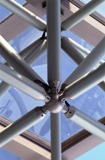 (NODE AND TUBE MEMBERS)
Construction
- According to the U.S. Department of Energy, a major benefit of space frame technology is the significant reduction in parts necessary to construct an item. This also leads to a much lower weight of the final product. The process of building is simplified and many tools are no longer necessary when a space frame design is implemented. This further reduces costs and completion time and involves less labor. Yet, the results are often superior to a more traditional design.
Scale
- The increased strength-to-weight ratio of space frame technology yields products that are not otherwise possible using older design processes. The famous Navy Pier in Chicago utilized a space frame roof to reduce the need for additional forms of support. The design allowed the roof to span further with its own intrinsic skeleton, eliminating awkward columnar supports to open up space.


INTERESTING ?....HURMMM..

No comments:
Post a Comment