AP773 PART1(1ST TASK) : URBAN DESIGN COMPETITION : RE-ENLIVENING OF PUTRAJAYA`S URBAN SPACE
MAIN OBJECTIVE : GENERATE CREATIVE PRACTICAL IDEAS TO RE-ENLIVENING THE EXISTING URBAN SPACES IN THE CORE PRECINT OF PUTRAJAYA.
PUTRAYA HOLDING`S HOPE : PROPOSE VIABLE CONCEPT THAT CAN BE TRANSLATE INTO PROPOSAL
GOALS : VIBRANT,SUSTAINABILITY AND SUCCESSFUL URBAN PLACES
THE MASTERPLANNING
1.THE MASTERPLAN SHOULD BE RESPONSIVE TO THE EXISTING AND FUTURE NEEDS OF THE COMMUNITY AND END USERS.
2.ADDRESSES THE INFRASTRUCTURE ,ECONOMIC AND SOCIAL ISSUES
3.ENVIRONMENTAL FRIENDLY WITH APPROACHES TO DESIGN SUCH AS THE MALAYSIAN GBI AND ZERO CARBON FOOTPRINT
4.SHOULD ENHANCE THE GARDEN CITY IMAGE OF PUTRAJAYA
EVALUATING CITERIA
1.SITE\CONTEXTUAL ANALYSIS IN AN EFFECTIVE MANNER THAT HIGHLIGHT THE RELATIONSHIP OF THE SITE CONTEXT AND OTHER EVIDENSE IN GENERATING KEY DESIGN ISSUES
2.CONVERT DESIGN ISSUES SUCCINCTLY INTO DESIGN\RESEARCH QUESTION
3.DEVELOPE A REALISTIC, VIABLE AND ECONOMIC DEVELOPEMENT PROGRAM
4.DIAGRAMING AND MAPPING THE STRATEGIES INTO WORKABLE CONCEPT INNOVATIVELY
5.TRANSLATE THE CONCEPT INTO WORKABLE URBAN SPACE DESIGN SOLUTIONS THAT ACHIEVE THE DESIRED THEME IN ENHANCING PUTRAJAYA `PUBLIC REALM`
SUBMISSIONS REQUIREMENT
1.MINIMUM OF A-0 (POTRAIT) SHEETS OF DRAWING
2.A3 REPORT OF THE PROPOSED SCHEME
Sustainability was a key aspect of the design, as this project is one of the ten pilot “green building” projects of the San Francisco Department of Environment, aiming to get platinum LEEDcertification. Actually, the building will consume 30-35% less energy than required by code.
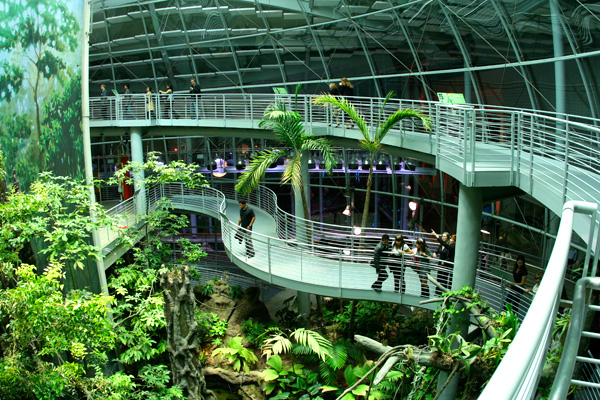
The project conserves two limestone walls from the previous building (1934), and houses a planetarium, a rain forest habitat and an aquarium, and several exhibition spaces to house the several Academy collections.
Sustainability was a key aspect of the design, as this project is one of the ten pilot “green building” projects of the San Francisco Department of Environment, aiming to get platinum LEEDcertification. Actually, the building will consume 30-35% less energy than required by code.
The project conserves two limestone walls from the previous building (1934), and houses a planetarium, a rain forest habitat and an aquarium, and several exhibition spaces to house the several Academy collections.
The planetarium and the bubble that contains the rain forest habitat are the two big spheres that shape the green roof. The roof becomes a landscape with California native species, that won´t need extra maitenance or water, attracting local species to occupy it. Thus, the green roof won´t be fully accesible to visitors, who can only walk through a small path.
And now to the green facts:
Heat and Humidity
Radiant floor heating will reduce energy needs by 5-10%.
Heat recovery systems will capture and utilize heat produced by HVAC equipment, reducing heating energy use.
The planted roof will provide a superior thermal insulating layer for the building, reducing energy needs for air-conditioning.
High-performance glass will be used throughout the building, reducing standard levels of heat absorption and decreasing the cooling load.
Reverse osmosis humidification systems will be used to keep the research collections at a constant humidity level, reducing energy consumption for humidification by 95%.
Natural Light and Ventilation
At least 90% of regularly occupied spaces will have access to daylight and outside views, reducing energy use and heat gain from electric lighting.
The undulating roofline will draw cool air into the open piazza at the center of the building, naturally ventilating the surrounding exhibit spaces. Skylights in the roof will automatically open and close to vent hot air out through the tops of the domes.
The skylights are strategically placed to allow natural sunlight to reach the living rainforest and coral reef.
Motorized windows will automatically open and shut to allow cool air into the building. Operable windows will also be employed in staff offices.
Photosensors in the lighting system will automatically dim artificial lights in response to daylight penetration, reducing the energy necessary to illuminate interior spaces.
Renewable Energy
A solar canopy around the perimeter of the roof containing 60,000 photo voltaic cells will supply almost 213,000 kWh of clean energy per year (at least 5% of the new Academy’s energy needs), and prevent the release of more than 405,000 pounds of greenhouse gas emissions annually.
The multi-crystalline cells are the most energy efficient cells on the market, achieving at least 20% efficiency.
Sensor faucets in the bathrooms will charge themselves with each use. Flowing water causes an internal turbine to generate power and charge the battery pack.
Water Efficiency
By absorbing rainwater, the new Academy’s living roof will prevent up to 3.6 million gallons of runoff from carrying pollutants into the ecosystem each year (about 98% of all storm water).
Reclaimed water from the City of San Francisco will be used to flush the toilets, reducing the use of potable water for wastewater conveyance by 90%.
Due to both low-flow fixtures and the use of reclaimed water, overall potable water use will be 30% less than baseline.
Saltwater for the aquarium will be piped in from the Pacific Ocean, minimizing the use of potable water for aquarium systems. Nitrate wastes will be purified with natural systems, ensuring that aquarium water can be recycled.
Recycled Building Materials
Over 90% of the demolition waste from the old Academy was recycled. 9,000 tons of concrete were reused in Richmond roadway construction, 12,000 tons of steel were recycled and went to Schnitzer Steel, and 120 tons of greenwaste were recycled on site.
At least 50% of the wood in the new Academy was sustainably harvested and certified by the Forest Stewardship Council.
Recycled steel will be used for 100% of the building’s structural steel.
The insulation that will be installed in the building’s walls is made from recycled blue jeans. The product contains 85% post-industrial recycled content and uses cotton, a rapidly renewable resource, as one of its main ingredients.
All concrete contains 30% fly ash, a by-product of coal-fired power plants. It also contains 20% slag, a waste product from metal smelting.
The Living Roof
A new link in an ecological corridor for wildlife, the new Academy’s living roof is planted with nine native California species that will not require artificial irrigation. The planted area measures 2.5 acres; it is now the largest swath of native vegetation in San Francisco.
Approximately 1.7 million plants blanket the living roof.
The native plants will provide habitat for a wide variety of wildlife. Beach strawberries (Fragaria chiloensis) produce berries that attract native birds, self heal (Prunella vulgaris) bears large tubular flowers that attract hummingbirds and bumble bees, sea pink (Armeria maritime) produces pom-pom-like flowers favored by moths and butterflies, stonecrop (Sedum spathulitholium) produces nectar for the threatened San Bruno elfin butterfly, tidy tips (Layia platyglossa) attract parasitic wasps and pirate bugs that feed on pest insects, miniature lupine (Lupinus bicolor) and California poppies (Eschscholzia californica) provide nectar for bees and butterflies, California plantain (Plantago erecta) hosts a variety of butterfly larvae, and the bright yellow flowers produced by Goldfield plants (Lasthenia californica) attract a wide variety of beneficial native insects.
Transportation
The new Academy will provide secure bicycle parking at the front and back entrances, as well as an electric car recharging station at the loading dock. Staff members will be compensated for using public transportation.
Local materials and products manufactured within 500 miles of the Academy will account for at least 20% of building materials. This reduces transportation impacts and supports the regional economy.
Sustainability was a key aspect of the design, as this project is one of the ten pilot “green building” projects of the San Francisco Department of Environment, aiming to get platinum LEEDcertification. Actually, the building will consume 30-35% less energy than required by code.
The project conserves two limestone walls from the previous building (1934), and houses a planetarium, a rain forest habitat and an aquarium, and several exhibition spaces to house the several Academy collections.
The planetarium and the bubble that contains the rain forest habitat are the two big spheres that shape the green roof. The roof becomes a landscape with California native species, that won´t need extra maitenance or water, attracting local species to occupy it. Thus, the green roof won´t be fully accesible to visitors, who can only walk through a small path.
And now to the green facts:
Heat and Humidity
Radiant floor heating will reduce energy needs by 5-10%.
Heat recovery systems will capture and utilize heat produced by HVAC equipment, reducing heating energy use.
The planted roof will provide a superior thermal insulating layer for the building, reducing energy needs for air-conditioning.
High-performance glass will be used throughout the building, reducing standard levels of heat absorption and decreasing the cooling load.
Reverse osmosis humidification systems will be used to keep the research collections at a constant humidity level, reducing energy consumption for humidification by 95%.
Natural Light and Ventilation
At least 90% of regularly occupied spaces will have access to daylight and outside views, reducing energy use and heat gain from electric lighting.
The undulating roofline will draw cool air into the open piazza at the center of the building, naturally ventilating the surrounding exhibit spaces. Skylights in the roof will automatically open and close to vent hot air out through the tops of the domes.
The skylights are strategically placed to allow natural sunlight to reach the living rainforest and coral reef.
Motorized windows will automatically open and shut to allow cool air into the building. Operable windows will also be employed in staff offices.
Photosensors in the lighting system will automatically dim artificial lights in response to daylight penetration, reducing the energy necessary to illuminate interior spaces.
Renewable Energy
A solar canopy around the perimeter of the roof containing 60,000 photo voltaic cells will supply almost 213,000 kWh of clean energy per year (at least 5% of the new Academy’s energy needs), and prevent the release of more than 405,000 pounds of greenhouse gas emissions annually.
The multi-crystalline cells are the most energy efficient cells on the market, achieving at least 20% efficiency.
Sensor faucets in the bathrooms will charge themselves with each use. Flowing water causes an internal turbine to generate power and charge the battery pack.
Water Efficiency
By absorbing rainwater, the new Academy’s living roof will prevent up to 3.6 million gallons of runoff from carrying pollutants into the ecosystem each year (about 98% of all storm water).
Reclaimed water from the City of San Francisco will be used to flush the toilets, reducing the use of potable water for wastewater conveyance by 90%.
Due to both low-flow fixtures and the use of reclaimed water, overall potable water use will be 30% less than baseline.
Saltwater for the aquarium will be piped in from the Pacific Ocean, minimizing the use of potable water for aquarium systems. Nitrate wastes will be purified with natural systems, ensuring that aquarium water can be recycled.
Recycled Building Materials
Over 90% of the demolition waste from the old Academy was recycled. 9,000 tons of concrete were reused in Richmond roadway construction, 12,000 tons of steel were recycled and went to Schnitzer Steel, and 120 tons of greenwaste were recycled on site.
At least 50% of the wood in the new Academy was sustainably harvested and certified by the Forest Stewardship Council.
Recycled steel will be used for 100% of the building’s structural steel.
The insulation that will be installed in the building’s walls is made from recycled blue jeans. The product contains 85% post-industrial recycled content and uses cotton, a rapidly renewable resource, as one of its main ingredients.
All concrete contains 30% fly ash, a by-product of coal-fired power plants. It also contains 20% slag, a waste product from metal smelting.
The Living Roof
A new link in an ecological corridor for wildlife, the new Academy’s living roof is planted with nine native California species that will not require artificial irrigation. The planted area measures 2.5 acres; it is now the largest swath of native vegetation in San Francisco.
Approximately 1.7 million plants blanket the living roof.
The native plants will provide habitat for a wide variety of wildlife. Beach strawberries (Fragaria chiloensis) produce berries that attract native birds, self heal (Prunella vulgaris) bears large tubular flowers that attract hummingbirds and bumble bees, sea pink (Armeria maritime) produces pom-pom-like flowers favored by moths and butterflies, stonecrop (Sedum spathulitholium) produces nectar for the threatened San Bruno elfin butterfly, tidy tips (Layia platyglossa) attract parasitic wasps and pirate bugs that feed on pest insects, miniature lupine (Lupinus bicolor) and California poppies (Eschscholzia californica) provide nectar for bees and butterflies, California plantain (Plantago erecta) hosts a variety of butterfly larvae, and the bright yellow flowers produced by Goldfield plants (Lasthenia californica) attract a wide variety of beneficial native insects.
Transportation
The new Academy will provide secure bicycle parking at the front and back entrances, as well as an electric car recharging station at the loading dock. Staff members will be compensated for using public transportation.
Local materials and products manufactured within 500 miles of the Academy will account for at least 20% of building materials. This reduces transportation impacts and supports the regional economy.
The workshop is an educational based event hosting a range of activities to encourage exchange of ideas and knowledge apart from strengthening ties between the various architecture student community in Malaysia. Participants are tested based on creativity as well as their mental and physical capability through the different explorative themed task and modules. These activities are geared at encouraging healthy competition among the future architecture graduates besides instilling courage and strong will amongst them before stepping into the realm of the working world.
THE OBJECTIVES
The following are the objectives of the program:
Sharing of knowledge through informative seminars and talk sessions.
To enhance the participants’ confidence, discipline, creativity and effective communication skill through participation in groups according to the program and module.
To create a healthy relationship among the participants through fun activities and gathering sessions.
Introducing and strengthening the name of local architecture to the outside world through participation of international universities/ institutions.
THE THEME
‘Terang’ is the term for brightness or clarity. It relates simply and clearly to the theme of light, and closely describes the idea that we aim for: a place, time and situation of light and all that light symbolizes.
Terang! symbolizes hopes and dreams, desires and ambitions, of well-being and happiness; hence the term ‘light-hearted’ used to describe a state of not being burdened by trouble, worry or care; and of good-spiritedness.
Terang! also brings the meaning of knowledge, a wholesome understanding, especially towards a more spiritual context; hence the term ‘enlightenment’ used to describe a knowing or an understanding of something, a “full comprehension of a situation”. For some, enlightenment is the ultimate goal for self-realization and completeness of life and the soul.
To achieve ‘terang’, to become ‘terang’, is, essentially, the ultimate goal.
THE PROGRAMMES
Various activities will take place throughout the Architectural Workshop 2011. These programmes are organized as a whole, incorporating the educational and moral needs, thus striking a balance through educational and proactive entertainment. To achieve the aims and objectives of the programme, the activities will be carried out through these methods:
Group activities
Certain activities, especially the main module, will be carried out in groups. Participants from each participating institution will be divided into smaller groups randomly by the organizer. The aim is to increase their confidence level, discipline, communication skills as well as team working. Furthermore, it creates an opportunity for the participants to rub shoulders with others from different schools.
Group competition based on school
Exhibition and performance will be carried out through this method. Participants will make necessary preparation at their own schools before departing to UTM. Entries will be submitted bearing their schools’ name and will be judged by professional judgers. Activities such as this create a healthy competition among schools of architecture.
Free activities and competition
Bazaarevo and competition allows participant to participate, representing their school without being tied to their designated groups. They are free to submit as many entries as they like depending on the categories. Mini games are also organized during Bazaarevo and it is open to whoever wishes to participate.
Programmes by organizer
There are several activities that are organized by organizer such as the opening and closing ceremony, as well as talks and seminar. Participants of the workshop are required to attend these activities.
Led by Yasutaka Yoshimura Architects in association with Nowhere Resort, the main purpose of the Ex-Container Project is to provide immediate housing for those who were displaced following the earthquake and tsunami that hit Japan on 11th of March, 2011.
Utilizing the format of ISO shipping containers the homes are easy to transport and offer a higher quality housing solution at an affordable price. Thinking beyond the short-term, the Ex-Container Project can initially be built as a temporary house and then converted to a permanent architectural structure.
SPACE FRAME STRUCTURES.........FROM FUNCTION TO AESTHETIC
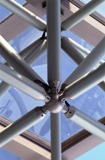
Space frame technology is based on interlocking and repeating patterns to create combined strength from the natural support of smaller, simple structures. Many designs use a multitude of triangular constructs to create a larger item that holds together without the need for additional structural elements. Other patterns involve tetrahedrons or additional geometric shapes, also placed in a repetitive formation to reinforce an overall structure.
History
The development of space frame technology is based on multiple independent efforts by a variety of inventors working in diverse fields. The first known attempt to construct a space frame was by Alexander Graham Bell, who applied the idea to flight engineering. Decades later, architects would create the geodesic dome, the first widespread applied space frame design. Uses for space frame technology have rapidly accelerated in the time since.
(NODE AND TUBE MEMBERS)
Construction
According to the U.S. Department of Energy, a major benefit of space frame technology is the significant reduction in parts necessary to construct an item. This also leads to a much lower weight of the final product. The process of building is simplified and many tools are no longer necessary when a space frame design is implemented. This further reduces costs and completion time and involves less labor. Yet, the results are often superior to a more traditional design.
Scale
The increased strength-to-weight ratio of space frame technology yields products that are not otherwise possible using older design processes. The famous Navy Pier in Chicago utilized a space frame roof to reduce the need for additional forms of support. The design allowed the roof to span further with its own intrinsic skeleton, eliminating awkward columnar supports to open up space.